
Why Every Digital Marketing Strategy Needs the Expertise of a GEO Agency
In the digital landscape, staying ahead of the curve is the difference between being found and being forgotten. A specialist Generative Engine Optimization (GEO) agency complements your existing marketing team with deep expertise in how generative engines work and that expertise is now a baseline requirement for any serious digital marketing strategy.
GEO is most useful when treated as an extension of a complete digital strategy rather than a replacement for SEO or a collection of tricks for influencing chatbots. Its role is to improve how accurately and confidently a brand can be discovered, understood, referenced and recommended across AI-assisted research journeys.
Search and Customer Discovery Now Operate Across Multiple Surfaces
The reason is structural. Search has split into two surfaces. Classic search still drives clicks, but AI-powered surfaces like ChatGPT, Gemini, Perplexity, and Google AI Overviews increasingly intercept queries before any blue link appears. A digital strategy that optimizes only for the first surface is leaving a growing share of decisions uninfluenced. GEO closes that gap.
The Four Capabilities a GEO Agency Adds
1. Citation and Answer Visibility Tracking
A capable GEO agency brings four capabilities that most internal marketing teams have not yet built. The first is citation tracking measuring which brands appear inside AI answers the queries that matter to your category, and how that share moves over time. The second is answer-shaped content design restructuring pages so that language models can extract clean, attributable passages.
Reliable tracking begins with a defined prompt library organized by buyer stage, category, problem, comparison, location, and branded accuracy. Tests should record dates, platforms, cited domains, cited pages, competitor overlap, and factual errors. Since generated outputs vary, trend reporting and repeated observations are more meaningful than isolated screenshots.
2. Answer-Shaped, People-First Content Design
Answer-shaped content provides a direct response early, then supports it with context, evidence, limitations, examples, and next steps. It uses descriptive headings, logical paragraph structure, lists for real criteria or processes, and tables for genuine comparisons. This format serves busy readers while making relevant passages easier for retrieval systems to identify.
Protect Brand Voice and Depth
A specialist should also protect brand voice and depth. Pages should not become a sequence of shallow answers written only for extraction. Strong GEO content retains narrative, expertise, useful detail, and conversion logic while making the most important information unmistakable.
3. Entity Authority and Third-Party Validation
The third is entity authority work aligning your brand, products, and people across the sources that feed AI knowledge graphs. The fourth is schema and technical fluency tuned for retrieval, not just for classic ranking.
Entity authority includes consistent organization details, product names, service descriptions, leadership profiles, locations, official social accounts, identifiers, and relationships across owned and credible third-party sources. It also includes earned media, industry references, reviews, association profiles, partner pages, research citations, and other evidence that verifies the brand independently.
4. Technical and Structured Data Fluency
Technical GEO starts with the same durable requirements as SEO: crawlable pages, indexable canonical URLs, useful HTML content, logical internal links, mobile usability, stable performance, and accurate metadata. It then adds careful review of answer-platform crawler access, entity markup, article or product markup, page relationships, and content freshness.
Schema should match visible information and current platform guidelines. It can clarify the identity and purpose of a page, but it does not guarantee ranking or citation. A responsible agency explains that limitation and avoids implementing irrelevant types simply because they sound connected to AI.
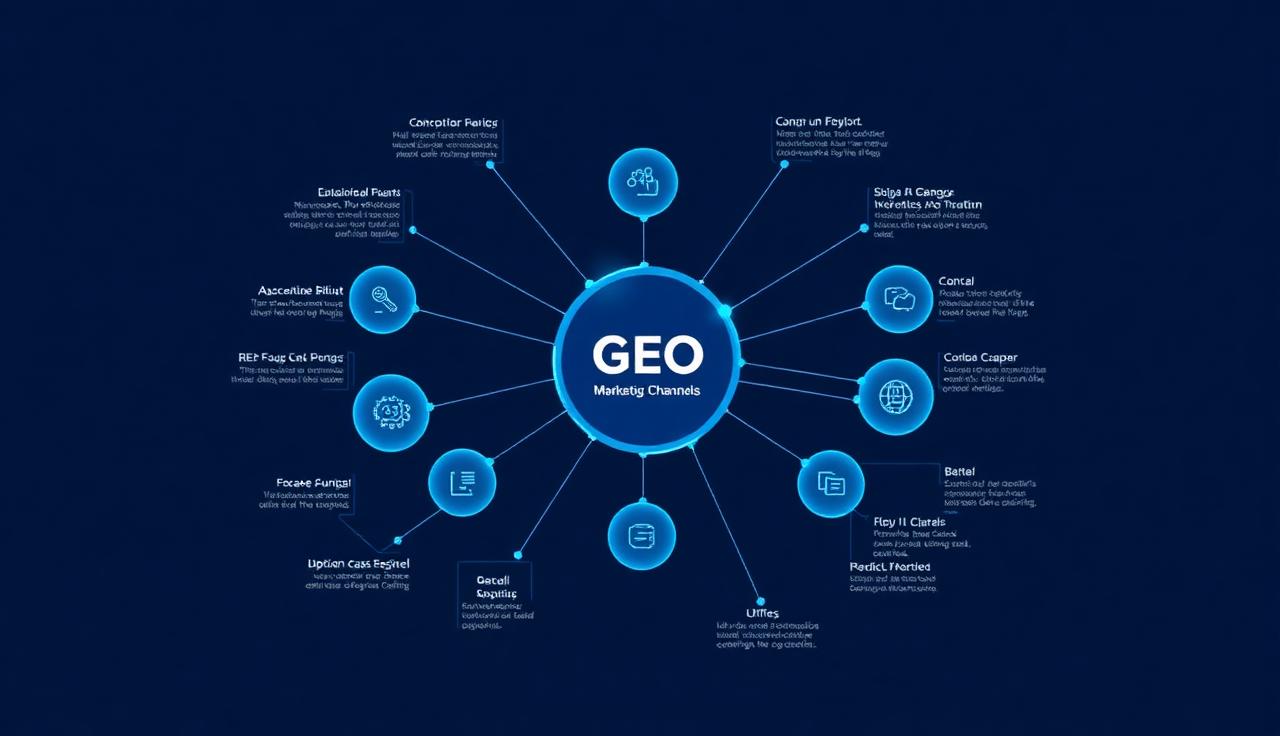
How GEO Strengthens Existing Digital Marketing Channels
Integrating a GEO agency into your existing stack does not require tearing anything down. The work layers cleanly on top of traditional SEO, paid media, content, and brand. In fact, GEO improvements typically lift classic SEO performance as a side effect: deeper topical coverage, stronger entity signals, and more original assets all strengthen domain authority and ranking.
SEO and Content Marketing
GEO can prioritize updates to pages that already rank, convert, or attract links. Better definitions, fresher evidence, clearer headings, stronger internal links, and improved technical access benefit both traditional results and answer experiences. Topic clusters also become more coherent because each page is assigned a distinct customer question and role.
Public Relations and Digital Authority
PR contributes more than backlinks. Independent coverage, expert quotes, interviews, awards with real criteria, event participation, and research partnerships help verify the brand beyond its own website. GEO strategy can guide PR toward topics and publications that fill known authority gaps while PR protects credibility and editorial standards.
Conversion Rate Optimization and Customer Experience
A cited page still needs to convert trust into action. GEO should work with CRO to ensure that direct answers lead naturally to deeper evidence, case studies, pricing information, contact options, demonstrations, or booking paths. The page must remain clear and useful after the answer engine sends a visitor.
Analytics and Revenue Operations
Marketing analytics teams can connect prompt visibility to search behavior, site engagement, lead quality, and sales outcomes. CRM fields such as 'How did you hear about us?' can capture AI-assisted discovery that referral data misses. Reporting should label direct attribution, assisted influence, and correlation separately.
When an Internal Team Benefits Most from a Specialist Agency
An external GEO partner is especially useful when the organization lacks prompt tracking methods, structured data expertise, technical SEO capacity, editorial resources, digital PR support, or a unified entity strategy. It can also accelerate work when several departments own different pieces of the brand's public information and no one has responsibility for consistency.
The agency should complement internal expertise rather than operate as a black box. Marketing, product, sales, support, legal, and subject-matter experts may all need to contribute facts, review claims, approve messaging, and interpret commercial impact. Clear governance prevents inaccurate content and duplicated effort.
The Risk of Waiting and the Risk of Rushing
The risk of waiting is real. Citation share inside AI answers compounds. The brands that publish answer-shaped, well-cited content first become the default sources models trust, and that head start is difficult for competitors to close. Just as early SEO investment created lasting advantages a decade ago, early GEO investment is creating the same kind of moat now.
However, rushing can create equal risk. Publishing large volumes of generic content, manufacturing reviews, placing unsupported superlatives, or chasing loopholes can undermine trust and expose the brand to platform policies. The sustainable advantage comes from being the clearest, most accurate, best-supported source—not from attempting to manipulate every response.
What Executives Should Ask Before Hiring a GEO Agency
- How do you define and measure AI visibility across variable answers?
- Which parts of the program rely on established SEO and which are GEO-specific?
- How do you validate claims, protect brand accuracy, and involve subject-matter experts?
- What technical access, content approvals, and cross-team support will you require?
- How will you connect visibility changes to branded demand, leads, pipeline, and revenue?
- Which outcomes are controllable, which are probabilistic, and which cannot be guaranteed?
For executives, the decision is straightforward. If your category is being researched, compared, or recommended inside AI answers and almost every category now is your digital strategy needs GEO expertise. Bringing in a specialist agency is the fastest way to acquire that capability without rebuilding your team from scratch.
The strongest strategy combines modern GEO methods with the search, content, brand, PR, technical, and revenue systems a company already uses. High Clarity helps teams add this capability through measurable priorities, responsible content practices, entity consistency, and clear integration with business outcomes.
Frequently Asked Questions
Does hiring a GEO agency mean replacing the existing SEO agency?
Not necessarily. GEO and SEO overlap, and organizations benefit when specialists collaborate. The right structure depends on capabilities and accountability. Define who manages technical SEO, content, entity data, digital PR, prompt tracking, and reporting so work is coordinated, not duplicated.
Which department should own GEO inside a company?
Marketing often leads, but effective GEO crosses SEO, content, communications, product, analytics, sales, and legal. Ownership should sit with a team able to coordinate functions, maintain entity accuracy, prioritize customer questions, approve claims, and connect visibility to measurable commercial outcomes.
Can paid advertising improve GEO performance directly?
Paid advertising does not purchase AI citations, but campaign data can reveal queries, objections, audiences, and messages. Visibility may strengthen brand demand. Use those insights to guide content and measurement without claiming ad spend directly controls generated recommendations or citations.
What should a GEO agency deliver during the first month?
The first month should establish priorities: prompt and citation baseline, technical access review, entity consistency audit, content inventory, competitive source analysis, measurement plan, and roadmap. Deliverables should identify pages and profiles to improve rather than promise immediate platform-wide visibility gains.
How can executives evaluate whether GEO investment is working?
Review AI mentions and citations alongside factual accuracy, branded search, engagement on cited pages, referrals, assisted conversions, sales feedback, pipeline, and revenue. Compare changes with documented baselines and publishing activity. Treat visibility as an intermediate signal, not final business success.